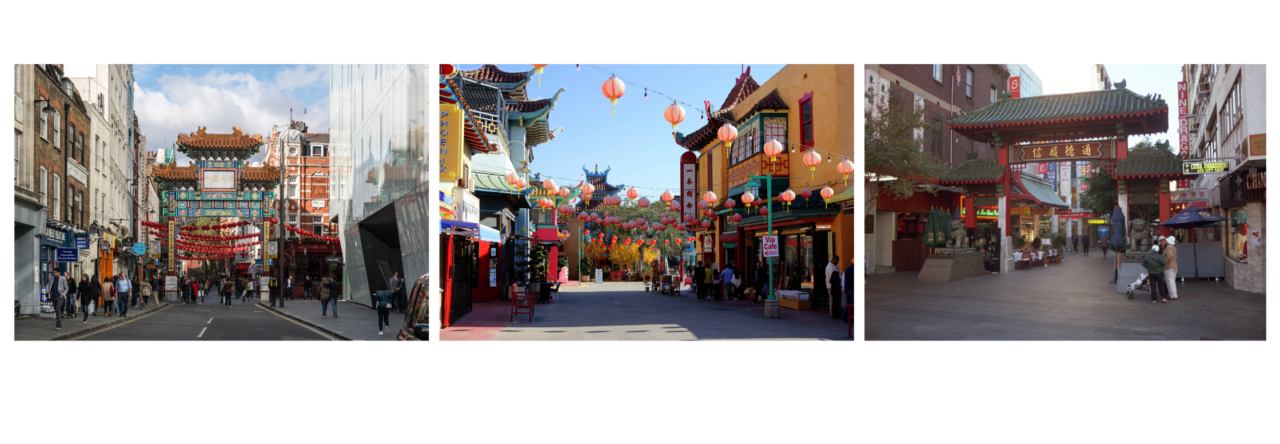
High School Lesson Plan: The Chinatown-Haymarket Revitalization in Sydney, Australia
Lesson Summary: Students will learn about the Haymarket-Chinatown revitalization plan recently passed by the City of Sydney Council. They will read about the historical and cultural context surrounding the decision and discuss a recent news video that provides a window into the situation on the ground. Then students will put themselves into the shoes of government officials, reporters, residents and Chinatown business owners in a town hall simulation activity, which encourages critical thinking from different perspectives and is a fun way to engage in challenging discourse. Finally, students will complete a homework assignment with open-ended questions to let their individual thoughts shine.
Time Allotment: 90-120 minutes in-class. Can be shortened by assigning Activity #1 as homework to be completed before class.
Supplies:
- Worksheets for Activity #1 and Activity #4
- Projector with internet access
- Simulation role cards for Activity #3
- Students assigned government representative roles in Activity #3 will need computers with internet access.
Download lesson plan:
Activities:
Activity #1: Assigned reading handout: Exploring the historical and cultural context surrounding Sydney’s Chinatown & The Haymarket Revitalization Plan
Adheres to Iowa High School Social Studies Standard SS-Geo.9-12.19: by completing the reading and subsequent activities, students analyze the relationship between historical events and the diffusion of ideas and cultural practices across space.
Activity #2: ABC News video + whole-class discussion
Adheres to Iowa High School Social Studies Standard SS-Gov.9-12.13: in the discussion, students evaluate the powers and responsibilities of local government and how it promotes and maintains order.
Watch this ABC news video: https://www.abc.net.au/news/2024-01-12/nsw-chinatown-redevelopment-plan-boost-business/103206322 then discuss the following as a class:
Discussion Questions:
- What perspectives are represented in the video? What are their viewpoints on the Haymarket revitalization plan?
- What seems to be the overall tone of the piece?
- Based on the video, what are the government’s priorities for the revitalization process? Why might that be?
- Is there anything that stood out to you in the video?
- In the video, the newscaster Lydia Feng says the City of Sydney Council hopes the revitalization will “return it to its former glory as a tourist destination.” Discuss the implications, merits and drawbacks of Chinatowns operating on tourism.
- Is this plan appreciably different from Chinatown gentrification efforts in North America? Why or why not?
Activity #3: Town Hall simulation
Adheres to Iowa High School Social Studies Standard SS.9-12.9: during the simulation, students will present arguments to reach a range of audiences using print and oral technologies.
Read your assigned role. Organize into groups based on whether you are a representative of the government, reporter, or resident/business owner/university student.
Residents/ business owners/university students:
- Before the simulation: brainstorm some questions to ask your government representative to clarify their plans or lay your concerns to rest.
- During the simulation: Ask those questions and any follow-ups you think of! This is your opportunity to be heard.
Reporters:
- Before the simulation: discuss which topics may be of interest to your editor or your audience (the general public). Feel free to brainstorm questions as well.
- During the simulation: take notes on the town hall. Take good care, as these notes will be shared with the general public (the whole class) after the meeting. You may also ask questions, either on behalf of yourself or your audience.
Government representatives:
- Before the simulation: Do some research on the policies you are backing. Be sure to brush up on any areas where you anticipate extra questions.
- During the simulation: answer your constituents’ questions. It may be necessary to dodge some questions by giving non-answers, “no comment,” or changing the subject, but be aware of the message dodging questions sends, as these people are your voter pool.
| Role Cards | LORD MAYOR CLOVER MOORE The George Street renovation was a resounding success, and you are looking forward to how the Haymarket revitalization will solidify your sixth term as one marked by development and economic growth. The City of Sydney’s vision for the future is a bright one. |
| CITY OF SYDNEY COUNCIL MEMBER You worked tirelessly to ensure that residents’ and business owners’ viewpoints were heard before drafting the plan, but also know from experience that constituents will always find a reason to complain. You barely won in the recent September 2024 election and want to focus on making sure this term is flawless so you don’t lose your seat. | REPORTER If politicians are being smarmy, the people deserve to know. If this plan is actually providing resources that will help diverse business owners succeed and flourish, it is your responsibility to get the word out. You won’t let your audience down, especially not your readers in the Chinese community. As someone who is half-Chinese yourself, you know all about the challenges faced by immigrants and minorities in modern Australia. |
| REPORTER As a reporter on the city government, you are interested to see what the new city council’s approach to the plan will be. Their priorities for implementation can have a huge impact on who the money actually helps. | RESTAURANT OWNER You bought and rebranded a large Yum Cha restaurant that had gone out of business during the pandemic. It is important to you to keep the original character of the place, so you have weekly lunches with the previous owners, but you also want to make it your own and target the changing demographics of customers. One of your goals is to increase patronage from university students. |
| RESTAURANT OWNER With the help of a long-lived loan from your bank and some clever refinancing, the Thai restaurant you opened in 2019, a year after immigrating to Australia, has survived the pandemic. But it is on unstable financial legs, and you barely meet the terms on your lease every month. You are worried that the construction will prevent customers from coming, which just might pull your business under and leave you in a difficult financial situation. | KARAOKE LOUNGE OWNER University students dominate both your customer base and your staff, especially Asian international students from countries where karaoke is especially popular. Business is booming, but will the revitalization bring in more competition? |
| UNIVERSITY STUDENT You and your friend from university came to the town hall together. They work in Chinatown, but you just come here to hang out. Going to karaoke and bars is fun, and you’re excited that the revitalization will provide for better lighting and more outdoor seating. With more development, though, hip places that think they can charge through the roof for a mantou start to move in, and your student budget can’t handle that. | UNIVERSITY STUDENT You work at a boba shop here in Chinatown, and dragged your friend to the town hall with you because you were nervous you wouldn’t understand everything. They are very kind to translate some of the more technical or Australia-specific terms for you, and you appreciate them so much. Chinatown is really special since it reminds you of home. You can talk to your coworkers in Mandarin, drink fruit teas and get a break from Western food – it is a chance to turn your brain off and has kept you sane as an international student. You aren’t quite sure how to feel about the revitalization, and hope it won’t change the area too much. |
| RESIDENT Upon arriving in Sydney, you bought an apartment in Chinatown-Haymarket, where you are currently living with your family while searching for a house in a suburb. You and your spouse both work in international trade, so the proximity to the office has been nice, but as the kids grow up they will need space to run around, and you will rent out the apartment to make some passive income. Even though Chinatown isn’t your permanent home, it is where you and your spouse work, and you are feeling excited about the new economic opportunity that the revitalization will bring. | RESIDENT You have been living in Chinatown your whole life, since you and your little sister would play hide-and-seek down Dixon street, amongst shops whose owners were all family friends. You’ve seen the area evolve and grow and diversify, until it was almost unrecognizable. Everyone spoke Mandarin now, and even the seemingly permanent fixtures of decades-old restaurants were taken away by the pandemic. Despite this, Chinatown has always been your home, and you will keep ahold of the small house you grew up in as long as you are able. The large-scale changes brought by the revitalization plan feel inevitable, but you hope the construction won’t impact your way of life too much. |
Activity #4: Homework
Bibliography
Anderson, Kay. 1990. “‘Chinatown Re-oriented’: A Critical Analysis of Recent Redevelopment Schemes in a Melbourne and Sydney Enclave.” Australian Geographical Studies [Now Geographical Research] 18(2): 137-154.
Anderson, Kay. 2018. “Chinatown dis-oriented: shifting standpoints in the age of China.” Australian Geographer 49:1, 133-148, DOI: 10.1080/00049182.2017.1327791
Cheng, Kevin. 2023. “Chinatown Resurgence.” Gourmet Traveler, March 23. https://www.gourmettraveller.com.au/dining-out/culture/chinatown-resurgence-20800/.
China-Australia Heritage Corridor. “Sydney Chinatown.” https://www.heritagecorridor.org.au/heritage-connections/sydney-chinatown.
City of Sydney. 2024. “Haymarket and Chinatown revitalisation strategy.” City of Sydney, January 25. https://www.cityofsydney.nsw.gov.au/strategies-action-plans/haymarket-chinatown-revitalisation-strategy.
Feng, Lydia. 2024. “Sydney’s Chinatown to be revitalised with brand new look as local businesses bounce back from COVID.” ABC News, January 11. https://www.abc.net.au/news/2024-01-12/nsw-chinatown-redevelopment-plan-boost-business/103206322.
Mak, Anna‐Lisa. 2003. “Negotiating identity: Ethnicity, tourism and Chinatown.” Journal of Australian Studies 27:77, 93-100, DOI: 10.1080/14443050309387854
Wong, A., and Ang, I. 2017. “From Chinatown to China’s town?: The newest Chinese diaspora and the transformation of Sydney’s Chinatown.” In New Chinese Migrations: Mobility, Home, and Inspirations (pp. 21-38). Routledge. https://doi.org/10.4324/9781315163239-2